A Deep Dive into Synchronous Motors for Specialized Uses
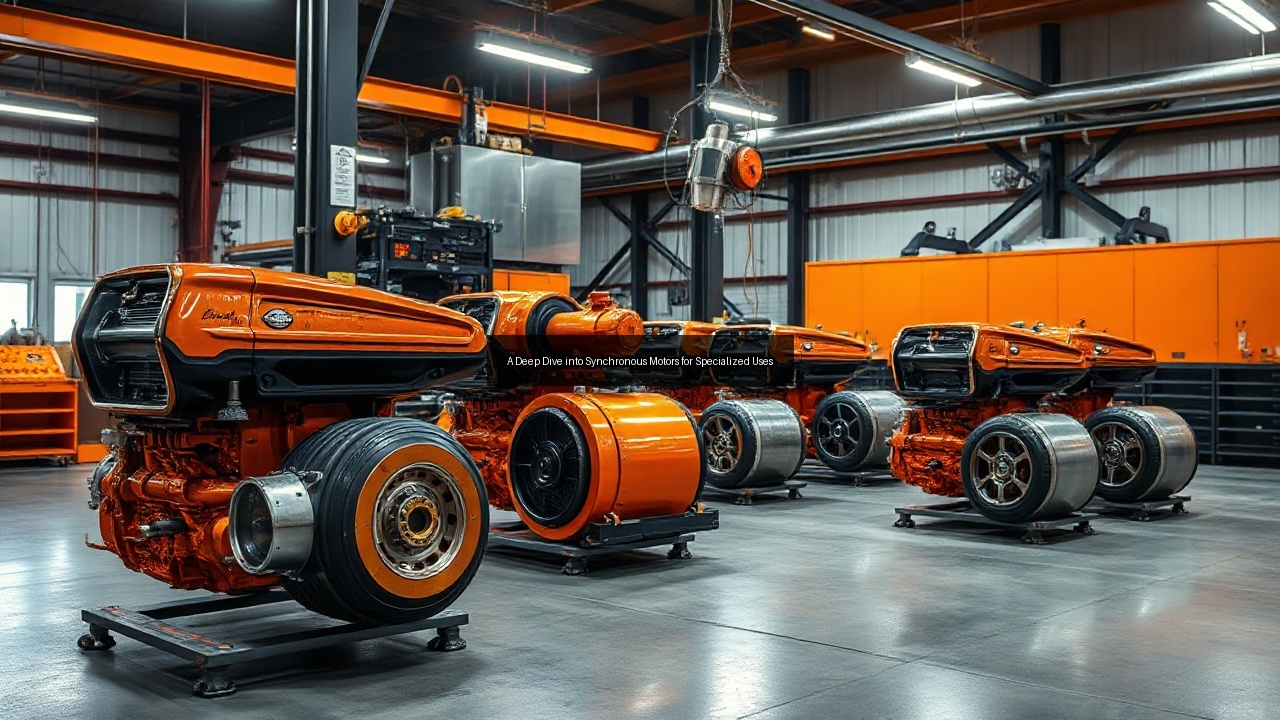
Understanding Synchronous Motors
What are Synchronous Motors?
Synchronous motors operate by locking the rotor speed exactly to the frequency of the alternating current supply. This precise synchronization delivers constant speed regardless of load variations. Engineers excite the rotor with direct current to create a magnetic field that interacts with the stator's rotating field. The result produces high efficiency and power factor correction in demanding setups. Unlike variable-speed options these motors maintain exact timing which proves essential in specialized equipment such as pumps compressors and processing lines. Custom motors built around this principle allow facilities to match exact torque and voltage requirements without compromise.
Designers often integrate direct current excitation systems with advanced controls to fine-tune performance. Synchronous motors excel when applications require steady operation over long periods. Manufacturers tailor windings and rotor constructions to handle specific environmental stresses including temperature extremes and vibration. This flexibility supports everything from small laboratory drives to large industrial installations. The inherent ability to operate at unity power factor reduces energy costs and improves overall system stability.
Comparison with Induction Motors
Induction motors rely on slip between the rotor and stator field to generate torque while synchronous motors eliminate slip entirely. This difference gives synchronous motors superior speed regulation and efficiency at full load. Induction motors tolerate overloads better in some cases yet they draw more reactive power which increases utility charges. Synchronous motors correct power factor and deliver higher starting torque when paired with proper excitation. Facilities comparing the two often select synchronous motors for continuous processes where speed constancy matters most.
Maintenance differs as well. Induction motors contain fewer external components but synchronous motors with brushless designs reduce wear points. Custom motors based on synchronous technology frequently outperform standard induction units in precision applications. Energy savings accumulate quickly in high-duty-cycle environments making the initial investment worthwhile. Engineers evaluate load profiles and duty cycles before choosing between the two motor families.
Applications of Synchronous Motors in Specialized Uses
Specialized uses span robotics medical imaging and high-speed packaging where timing accuracy determines product quality. Synchronous motors provide the repeatable motion required for coordinated multi-axis systems. Custom motors adapt frame sizes mounting options and cooling methods to fit unique machine layouts. In research laboratories these motors drive centrifuges and test rigs that demand exact rotational speeds.
Process industries employ synchronous motors in extruders and mixers where consistent torque prevents material defects. The motors integrate easily with variable frequency drives for soft starting and speed adjustment when needed. Custom electric motor solutions further optimize efficiency by matching stator and rotor geometries to specific duty cycles. This tailored approach minimizes energy waste and extends service life in continuous operations.
Types of Synchronous Motors
Brushless DC Synchronous Motors
Brushless dc synchronous motors replace mechanical brushes with electronic commutation which increases reliability and reduces maintenance. These motors combine the speed precision of synchronous designs with the simplicity of dc motors. Permanent magnets on the rotor eliminate the need for external direct current excitation in many models. The result delivers high torque density and quiet operation suitable for medical devices and aerospace actuators.
Engineers value brushless dc configurations for their fast response and low inertia. Custom motors in this category often feature integrated encoders and drivers for closed-loop control. Performance remains stable across wide temperature ranges making them ideal for outdoor or enclosed environments. Manufacturers optimize winding patterns to achieve desired speed-torque curves without additional gear reduction in many cases.
Alternating Current Synchronous Motors
Alternating current synchronous motors connect directly to grid power and maintain exact speed determined by supply frequency. Larger units frequently serve in power plants and water treatment facilities where efficiency and power factor matter. The stator receives alternating current while the rotor uses direct current or permanent magnets to stay locked in step. This architecture supports both fixed-speed and adjustable-speed operation through modern drives.
Facilities select alternating current synchronous motors when harmonic distortion must stay low. Custom motors allow specification of voltage insulation class and enclosure type to match site conditions. Advanced designs incorporate damper windings for improved starting and stability under sudden load changes. The motors operate efficiently at partial loads which benefits processes with fluctuating demand.
Servo Motors and Their Precision Engineering
Servo motor designs incorporate feedback devices that enable sub-degree positioning accuracy. Synchronous servo motors combine high torque density with rapid acceleration for automated machinery. Precision engineering ensures minimal cogging and smooth motion at low speeds. These motors appear in CNC equipment robotics and semiconductor handling systems where repeatability directly affects yield.
Custom motors extend servo capabilities by offering specialized shafts connectors and feedback options. Gear integration further multiplies torque for heavy payloads without sacrificing response time. Manufacturers apply advanced materials and winding techniques to reduce heat and increase continuous power ratings. The result supports demanding cycles in packaging printing and assembly lines.
Custom Motors for Unique Applications
Designing Custom Electric Motors
Designing custom electric motors begins with detailed analysis of torque speed voltage and environmental requirements. Engineers model magnetic circuits and thermal performance before prototyping. Synchronous motors lend themselves to customization because rotor and stator parameters can be adjusted independently. This freedom produces units that fit unusual mounting envelopes or extreme duty cycles.
Collaboration between application engineers and motor designers yields optimized solutions for specialized equipment. Custom motor projects often include finite element analysis to verify efficiency and structural integrity. The process incorporates client-specified features such as particular shaft diameters or integrated sensors. Final designs undergo rigorous testing to confirm performance matches specifications before production release.
Manufacturing Processes for Custom Motors
Manufacturing custom motors requires flexible production lines capable of handling non-standard laminations windings and housings. Precision machining ensures tight tolerances on rotor balance and air-gap uniformity. Synchronous motor builds frequently involve hand-assembly of windings followed by vacuum impregnation for insulation strength. Quality checkpoints verify each stage to maintain consistency across small-batch runs.
Advanced facilities combine automated winding machines with skilled technicians for complex configurations. Custom electric motor production benefits from modular fixturing that accommodates design variations without long retooling times. Traceability systems track materials and processes for every unit. This disciplined approach delivers reliable motors even when specifications deviate from catalog offerings.
Inventory Management for Custom Motors
Inventory management for custom motors balances raw material availability with project timelines. Suppliers maintain stocks of specialized laminations magnets and wire gauges to shorten lead times. Synchronous motor projects often require coordinated scheduling of subcomponents such as encoders and cooling fans. Effective systems prevent delays while avoiding excess capital tied up in finished goods.
Manufacturers use demand forecasting to align production capacity with incoming orders for customized motors. Digital tracking monitors work-in-process inventory and triggers replenishment of critical parts. Clients receive regular updates on build status which supports their own planning. This transparency reduces project risk and accelerates integration of new motors into existing equipment.
Synchronous Motors in Industrial Applications
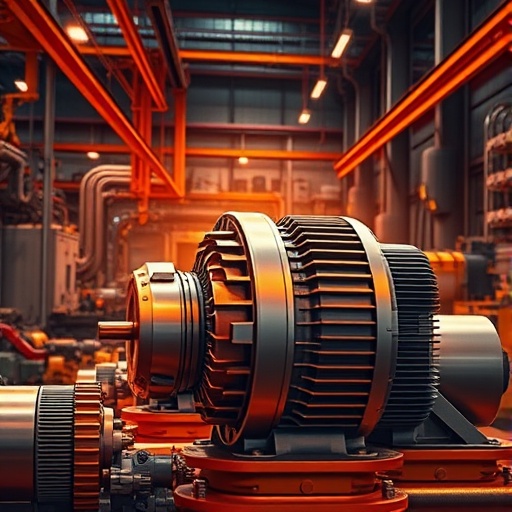
Integration with Generators
Integration with generators allows synchronous motors to operate in regenerative modes that recover energy during deceleration. Large systems pair motors with generators to maintain grid stability during load swings. The motor-generator set provides precise frequency control for sensitive test equipment and research facilities. Custom motors designed for these pairings include reinforced shafts and enhanced cooling to handle bidirectional power flow.
Facilities gain efficiency by using synchronous motors that double as synchronous condensers when needed. The combination improves voltage regulation across the plant electrical network. Engineers size generators and motors together to optimize overall system performance and reduce harmonic distortion. This integrated approach proves valuable in mining operations and continuous-process plants.
Use in Truck and Heavy Machinery
Use in truck and heavy machinery demands robust construction that withstands shock vibration and wide temperature swings. Synchronous motors deliver high starting torque for propulsion systems and auxiliary drives. Custom motors adapt frame strength and sealing to meet off-highway requirements. Direct integration with gear reducers provides the necessary torque multiplication for traction and lifting functions.
Electric motors in trucks benefit from the constant speed characteristic of synchronous designs during highway cruising. Regenerative braking recovers energy that would otherwise dissipate as heat. Manufacturers tailor cooling circuits and insulation for continuous operation under load. The result extends component life and lowers operating costs in demanding fleet applications.
Advantages of Synchronous Motors in Precision Tasks
Advantages of synchronous motors in precision tasks include zero speed error and excellent dynamic response when paired with modern drives. These motors maintain position without additional holding brakes in many servo applications. Custom motors further enhance performance by incorporating low-inertia rotors and high-resolution feedback. The combination supports rapid indexing and smooth contouring in machine tools.
Precision engineering reduces torque ripple which improves surface finish in machining and coating processes. Facilities report higher throughput and lower scrap rates after switching to synchronous motor solutions. Inventory of standardized mounting interfaces simplifies retrofits into existing equipment. Overall the technology delivers measurable gains in accuracy repeatability and energy efficiency across specialized industrial tasks.
See Also
- Innovative Manufacturing Techniques for Bespoke Motors
- How Customized Motors are Revolutionizing Precision Engineering
- Harnessing the Potential of Induction Motors in Customized Machinery
- Unlocking the Power of Custom Motors for Your Unique Applications
- From Concept to Creation How Custom Motors Transform Industries